How Accurate Is Apple Watch Calorie Tracking? What Studies Show
Apple Watch heart rate is accurate, but its calorie burn estimates are typically 20 to 30% off. What the research says, why, and how to use the numbers well.
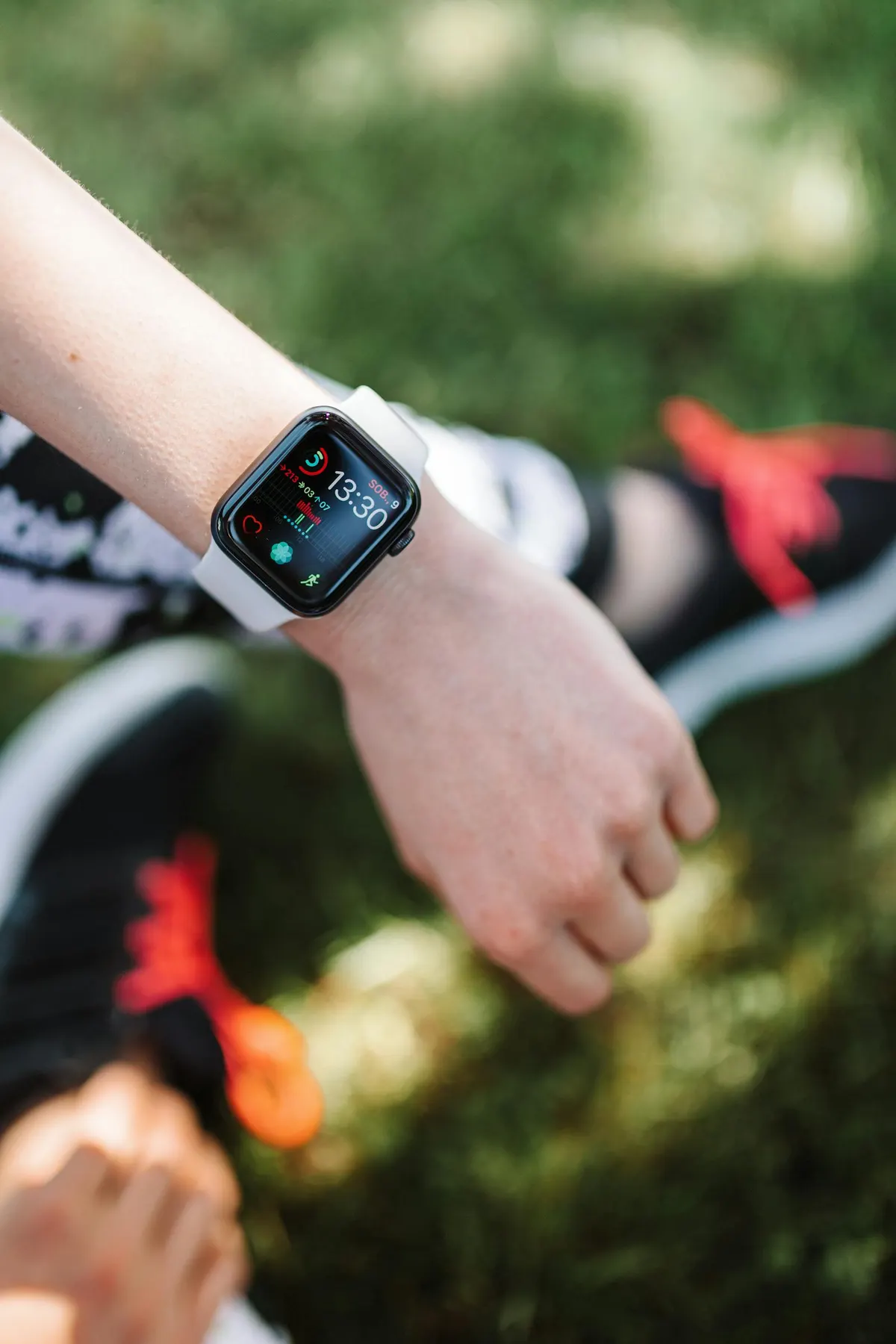
Apple Watch is one of the most accurate wrist wearables you can buy. But "accurate" means different things for different measurements. Its heart rate readings are excellent. Its calorie estimates are much rougher, and the research has said so consistently since 2017. Here's what the studies found, why calories are so hard to measure from a wrist, and how to use the numbers without letting them undo your diet.
The short version
- Heart rate is accurate. Studies put Apple Watch heart rate error at around 2% to 4%, with almost no bias.
- Calories are not. For an individual workout, errors of 20% to 30% are typical, and some studies found much more.
- The error isn't always in the same direction. Several recent lab studies found the watch overestimates calories during exercise, but not all.
- It's still among the best. Apple Watch usually ranks at or near the top of wrist devices. The whole category struggles with calories.
- Use it for trends, not totals. Don't eat back every calorie the watch says you burned.
What the studies say
Stanford, 2017: heart rate good, calories poor
Researchers at Stanford tested seven wrist devices, including Apple Watch, on 60 volunteers who sat, walked, ran and cycled, comparing them against medical-grade ECG and indirect calorimetry (measuring the oxygen you breathe). Apple Watch's median heart rate error was just 2%. But none of the seven devices measured calories accurately in any setting, with median errors ranging from 27% for the best device to 93% for the worst. The authors' conclusion: wearables measure heart rate well but "poorly estimate" energy expenditure.
Large reviews, 2020 to 2022: no brand is accurate for calories
A 2020 systematic review in JMIR mHealth and uHealth pooled 158 studies of nine brands. It found Apple Watch and Garmin were the most accurate for heart rate, and that "for energy expenditure, no brand was accurate." A 2022 review from McMaster University reached the same conclusion, with calorie errors above 30% for every brand.
Apple Watch Series 6 outdoors, 2022
A study in Frontiers in Physiology tested Apple Watch Series 6 against a portable metabolic analyser outdoors. The average error was about 20% for walking and 24% for running, and the watch overestimated calories in both.
The biggest Apple Watch analysis yet, 2025
A 2025 meta-analysis from the University of Mississippi, published in Physiological Measurement, pooled 56 studies. Heart rate error averaged about 4% and step counts about 8%. Calories averaged about 28% error, and every subgroup the researchers looked at, from walking to cycling, stayed above the 10% threshold usually used for a valid measurement. Newer models were slightly better. As the lead researcher put it, don't take every number as 100% truth, "especially the calories."
2026: still large and inconsistent
A living systematic review in npj Digital Medicine in 2026 reviewed 82 Apple Watch studies. Heart rate held up well, especially on newer sensors. Calorie error ranged from under 10% for running in one study to over 150% for walking in another, and the authors called it "inconsistent and frequently large." A 2026 PLOS ONE study of four popular watches found all of them overestimated calories during cycling, with Apple Watch the closest but still biased high, and errors growing with body fat.
What Apple says
Apple's own November 2024 white paper reports much tighter numbers in its lab testing, for example an average error of 0% with a standard deviation of 9% for walking, running and hiking, and 2% with a standard deviation of 17% for strength and core workouts. Two things are worth knowing. These are averages across many people when the watch is calibrated and worn correctly, and a standard deviation of 9% to 20% still means a single workout can easily be 20% or more off. The figures also come from Apple rather than an independent study.
Why calories are so hard to measure from your wrist
Your watch measures heart rate directly with its optical sensor. It can't measure calories directly at all. It infers them through a chain of estimates:
- It guesses what you're doing from motion, or from the workout you chose.
- It picks a calorie model for that activity, built from population averages.
- It combines your heart rate, motion, GPS speed and estimated fitness (VO2 max) with your age, sex, height and weight.
- It adds resting calories, which are themselves estimated from your height, weight, age and sex.
Every step adds error, and none of it captures how efficient your particular body is. Two people with the same heart rate and weight can burn quite different amounts. Strength training is especially hard because wrist movement disrupts the heart rate signal and effort doesn't map neatly onto heart rate.
Active calories vs resting calories
Apple Watch splits your burn into two numbers. Active calories, which fill your Move ring, are calories above your resting burn from movement and exercise. Resting calories are what you'd burn anyway. Total burn is the two together. Resting calories come from a formula based on your profile, much like a BMR calculator, so they're only as accurate as that formula. Active calories carry most of the error described above.
How to make your Apple Watch more accurate
- Keep your Health details up to date. Height, weight, sex and birth date all feed the calculation. Update your weight as it changes.
- Calibrate it. With Location Services and Motion Calibration turned on, do an Outdoor Walk or Outdoor Run workout for about 20 minutes on flat, open ground at your normal pace. Apple uses this to learn your stride and fitness.
- Wear it snug. Keep it on top of your wrist and tighten the band for workouts so the heart rate sensor stays in contact.
- Pick the right workout type. The watch uses a different model for each workout, so choosing "Functional Strength Training" instead of "Other" helps.
- Use a chest strap for hard sessions. A Bluetooth chest strap gives the most reliable heart rate during interval and strength training.
Should you eat back the calories your watch says you burned?
Usually not all of them. With a typical error of 20% to 30%, and several studies showing overestimation during exercise, eating back every active calorie can quietly erase the deficit you planned. Research on daily energy use also suggests that total burn doesn't rise one for one with activity, because the body partly compensates.
A practical approach: set your calorie target from a calorie deficit calculator using your typical activity level, and treat workouts as already included. If you're training hard and feel run down, eat back a portion, and then let your weight trend over two to four weeks tell you whether to adjust. The scale is a better judge of your real calorie balance than any wearable.
The real lever is the food side
A watch that's 25% off on a 400 calorie workout is out by about 100 calories. Forgetting to log a latte and a handful of snacks can be out by 400. For most people, food tracking makes a bigger difference to accuracy than anything the watch does. Bento Bunny works on iPhone and Apple Watch and lets you log a meal by snapping a photo or typing a sentence, so the intake side of the equation is as easy to keep up with as your rings. See our Apple Watch calorie tracking guide for how food logging on the watch works.
Frequently Asked Questions
How accurate is Apple Watch calorie burn?
Does Apple Watch overestimate calories?
Are active calories or total calories more accurate?
Is Apple Watch heart rate accurate?
Should I eat back my Apple Watch calories?
How do I make my Apple Watch calories more accurate?
Are newer Apple Watch models more accurate for calories?
Start tracking with Bento Bunny
AI calorie tracking — just Type what you eat.